Start with the movement map
Sketch the routes: where forklifts turn, where aerial lifts extend, where people enter, and where vehicles idle. The barrier type and panel spacing change when equipment needs swing or jib room near the line. For elevated work, reserve extra clearance where a platform could rotate into the buffer; see /boom-lift-rental/ and /articulating-boom-lift-rental/.
Ground and drainage in Jackson
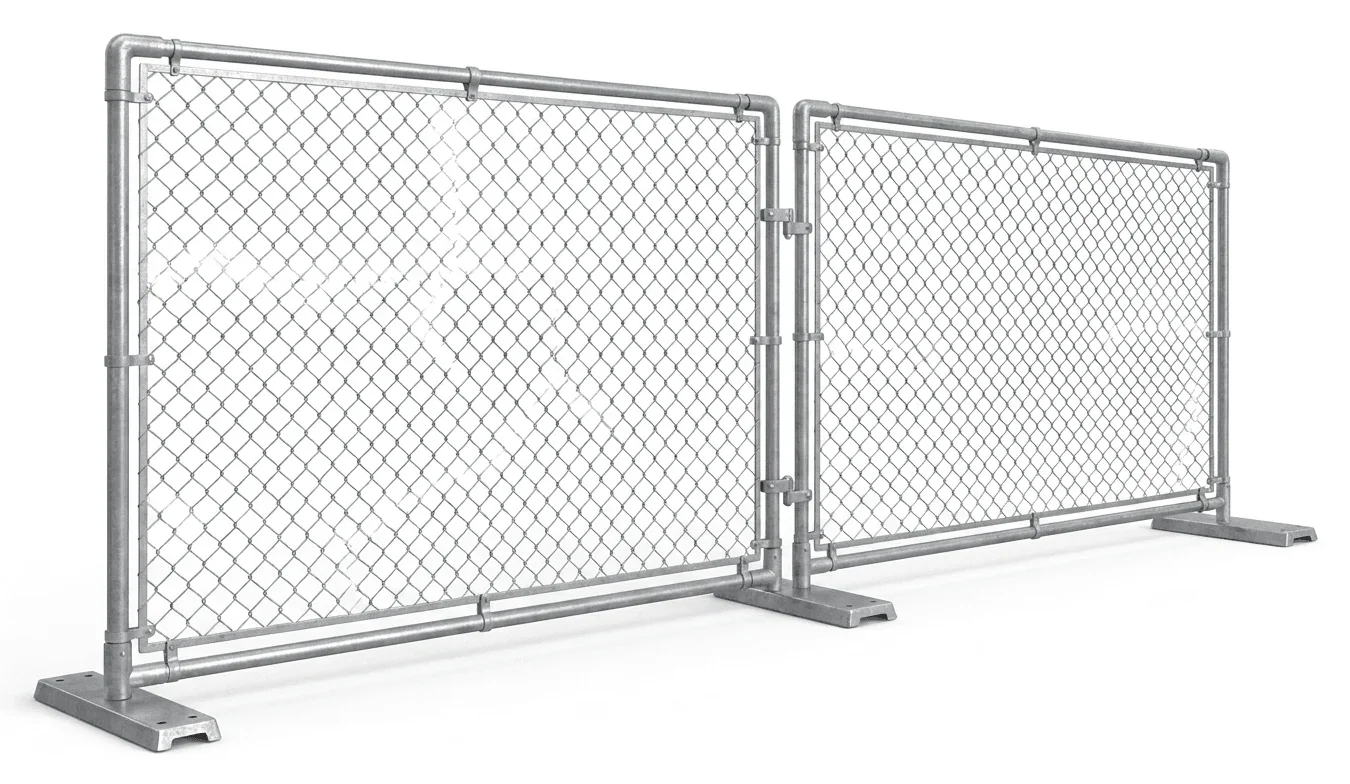
On clay-heavy surfaces, panels and stands can settle unevenly after rain. Standing water also migrates toward low points, loosening site-stability factors or undermining stakes. Favor placements that shed water and avoid freshly filled cuts. Recheck verticality and toe clearance after major weather swings.
Access control without bottlenecks
At busy distribution courts or campus service roads, plan gates to separate pedestrians from lift or truck conflict zones. Use longer sightlines at corners and keep barricades out of scissor lift approach lanes; see /electric-scissor-lift-rental/ for interior slab work and /rough-terrain-scissor-lift-rental/ for uneven exterior approaches.
Lighting, power, and night work
If work continues after dark, coordinate fence lines with generator and light tower placement so glare does not blind operators at entries. Avoid cable crossings at gates; align with the power plan at /generators-light-towers-rental/.
What to measure before you call
- Total perimeter length and number of controlled entries
- Surface type, slope, and known soft spots
- Nearest equipment traffic and turning radii
- Expected weather exposure and duration on site