Map the load, then the placement
Start with the electrical or lighting load and where equipment can sit in relation to the work. For generators, list the combined running load and the highest expected surge on start-up. For light towers, note the area to illuminate, mounting height, and any glare-sensitive zones like entry gates or pedestrian paths.
- Can the unit sit below the task with clear cord routing, or must it be set back from traffic and materials?
- Will light heads aim over staged freight or temporary fencing without casting shadows on active lanes?
- Are there time windows when noise and light spill must be minimized near offices or patient-facing spaces?
Jackson soil and surface support
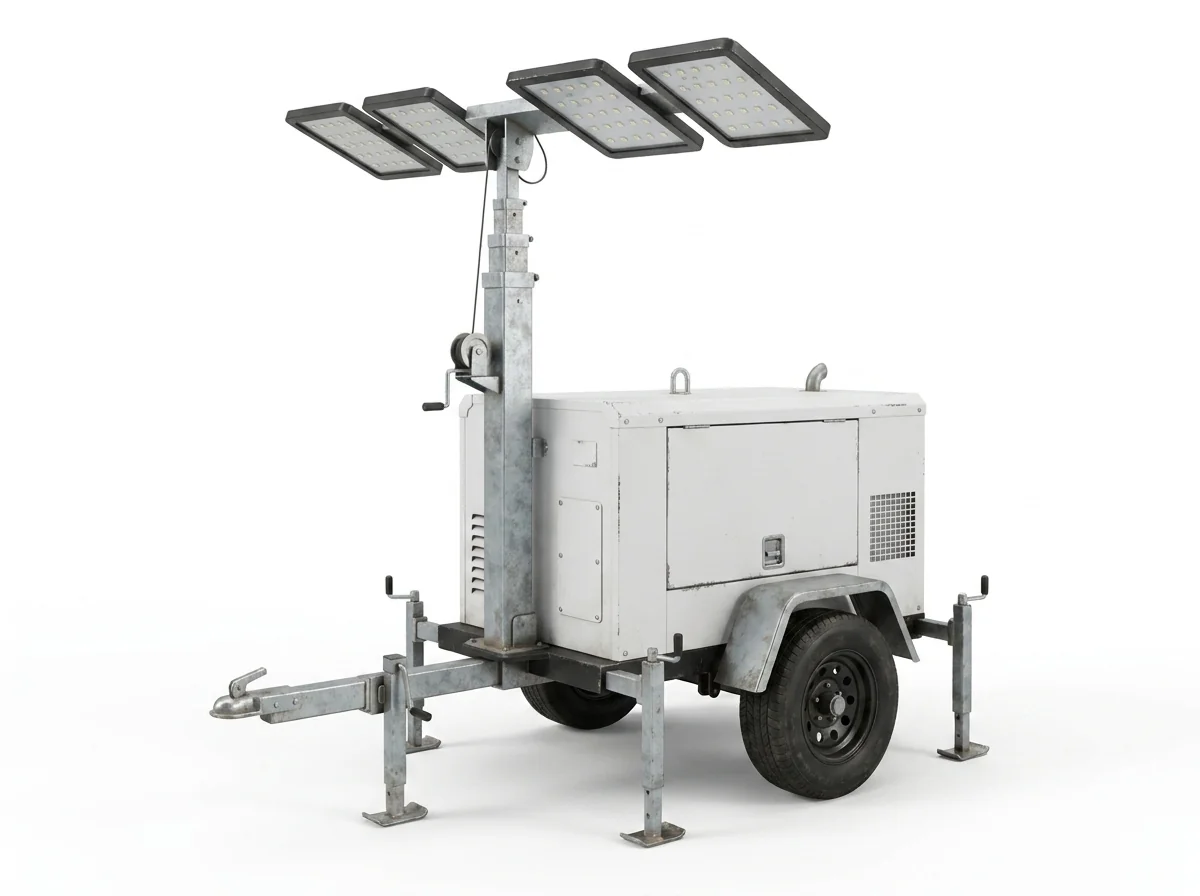
Much of Jackson’s outdoor work sits over expansive clay that softens after rain and firms during dry spells. That variability can cause point loading and wheel sink. For towable generators and light towers, the deciding factors are ground pressure and pad size at the parking spot. On grass, uncompacted fill, or shoulders, plan for wider support points and test stability before committing to long cable runs.
- If the unit must cross turf or unpaved paths, confirm the route width, grade, and turning radius.
- At distribution yards and industrial drives, check for buried utilities or patched asphalt that may not carry concentrated loads.
Heat and humidity planning
High humidity and heat reduce effective cooling and encourage condensation inside connectors and junctions. Select cable runs and enclosure ratings with moisture in mind, and separate heat-producing generators from light heads and pedestrian areas to reduce hot-air recirculation.
Runtime, refuel, and access control
Long-shift operations around logistics gates and maintenance windows on campuses push runtime. Decide whether one large unit with longer intervals or multiple smaller placements reduce cable length and glare conflicts. Confirm:
- Refuel path and turning space during peak traffic
- Lockable placement away from forklift and lift routes
- Cord management across crossings used by scissor lifts or booms; see /aerial-lift-rental/ for alignment with elevated work
Related planning
If elevated maintenance is part of the task, size lighting for the mast or platform position:
- For slab-only interiors, see /electric-scissor-lift-rental/
- For uneven exterior surfaces, see /rough-terrain-scissor-lift-rental/ or /boom-lift-rental/
What to measure before you call
- Total running watts and largest motor start
- Required lux/footcandle at the task and spill limits
- Placement footprint, surface type, and slope
- Longest cable run and crossing points
- Access gate width and towing method